
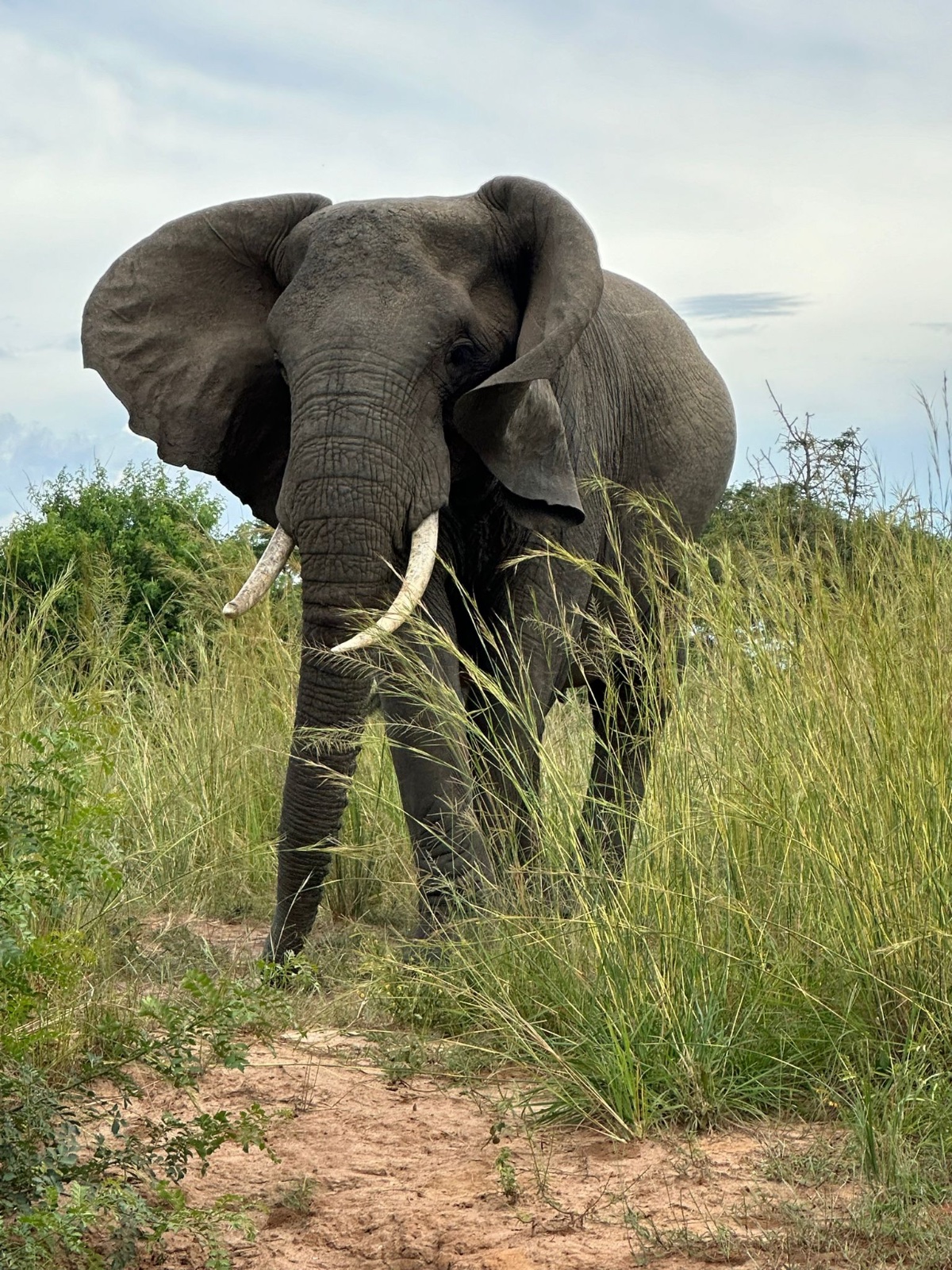
There is a reason Queen Elizabeth National Park is Uganda's most popular safari destination. It is not just the game drives or the boat cruises — it is the moments in between. The moments when wildlife walks into your world uninvited, and you realize that here, you are the guest.
The Moment
It was around 4 PM. The afternoon heat was beginning to break, and a group of our guests were resting on the lodge veranda after a morning game drive. I was reviewing the next day's schedule when someone whispered: 'Duncan... look.'
A mature bull elephant had emerged from behind a cluster of acacia trees, barely 30 meters from the lodge. He was walking slowly, deliberately, trunk swaying from side to side, ears flapping gently against the heat. He passed directly in front of us, so close that we could hear the soft rumble of his footsteps and the occasional crack of a branch under his massive feet.
Nobody moved. Nobody spoke. We just watched. For about five minutes, this enormous animal walked through our space as if we were not there. Then he disappeared into the thicket beyond the clearing, and the birds started singing again.
Why This Happens in Queen Elizabeth
Queen Elizabeth National Park covers nearly 2,000 square kilometers of savanna, wetlands, and forests. Many lodges and camps are deliberately located within the park's ecosystem, which means wildlife roams freely around them. Elephants, warthogs, hippos, and even leopards have been spotted near accommodation areas.
This is not a zoo experience. The animals are wild, free, and going about their daily routines. You happen to be in their path — and that is what makes it extraordinary.
- Queen Elizabeth NP is home to approximately 2,500 elephants
- The park spans savanna, forest, wetlands, and crater lakes
- Famous for tree-climbing lions in the Ishasha sector
- The Kazinga Channel boat cruise offers close-up hippo and elephant sightings
- Over 600 bird species recorded — one of the highest counts in any African park
About This Place
The Mweya Peninsula sits at the confluence of the Kazinga Channel and Lake Edward, creating a natural funnel for wildlife moving between water sources and grazing areas. Lodges on the peninsula enjoy some of the best wildlife viewing in East Africa, simply because animals need to pass through the area on their daily rounds.
Travel Tips
Travel Tip
Ask your guide to schedule a 'down day' at your Queen Elizabeth lodge. Some of the most memorable wildlife sightings happen not on game drives, but from the veranda with a cup of Ugandan coffee.
We recommend spending at least two nights in Queen Elizabeth to fully experience the park. A morning game drive, an afternoon Kazinga Channel boat cruise, and time at the lodge give you the best variety. The Ishasha sector, famous for its tree-climbing lions, is a worthwhile add-on if your schedule allows.
Social Impact
Queen Elizabeth National Park is named after Queen Elizabeth II, who visited Uganda in 1954. Today, it is managed by the Uganda Wildlife Authority and plays a critical role in elephant and lion conservation.